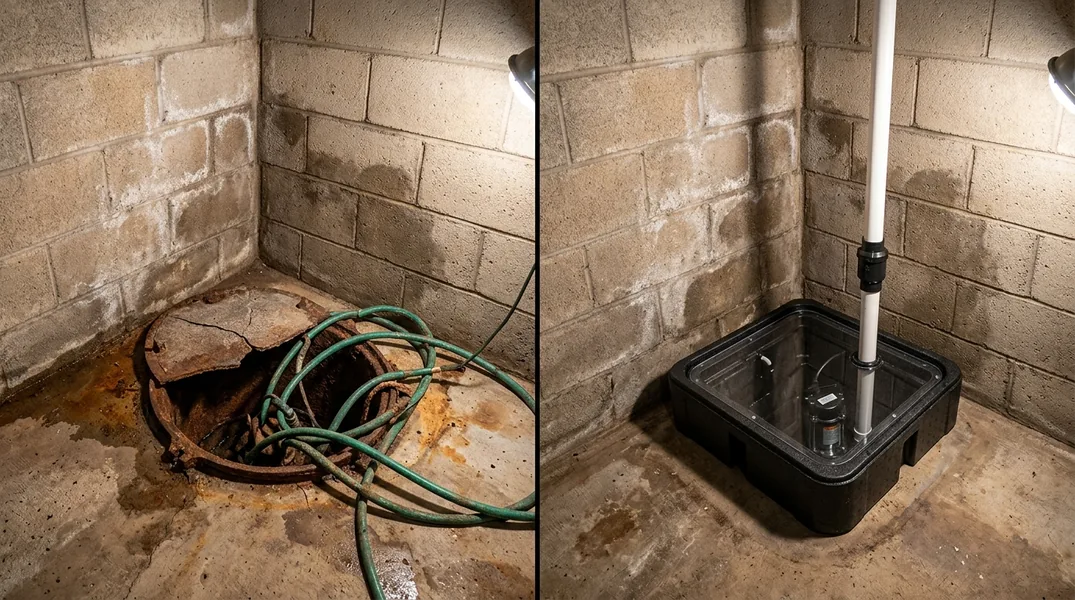
Why Sump Pump Maintenance Matters Before Oklahoma's Spring Storm Season
Oklahoma's spring storm season is not a gentle transition. Between March and June, Oklahoma City routinely sees heavy rain events, hail, and the kind of sustained downpours that push water against foundations for hours. For homeowners with a basement or crawl space, the sump pump is the last line of defense between that water and the inside of the house. When it works, you never think about it. When it fails, you can be looking at inches of standing water, ruined storage, and expensive repairs within a single afternoon.
The problem is that sump pumps sit idle for months. A pump that ran fine last spring can seize up, clog, or lose its prime after a long dry winter. That is why the weeks before storm season are the right time for sump pump maintenance. A little attention now is far cheaper than emergency water removal later. If your basement has already taken on water in past storms, it is also worth reviewing your overall Basement Waterproofing strategy, because a pump alone cannot manage every source of moisture.
Start With the Basics: Clean the Pit and Test the Float
The first step in any sump pump maintenance routine is visual inspection. Remove the lid from the sump pit and look inside. Over time, sediment, gravel, and debris settle in the bottom of the pit and can clog the pump intake or jam the float switch. If the pit is dirty, scoop out the debris and flush it with clean water. While you are in there, check that the pump stands upright and that the discharge pipe is securely connected. A pump that has shifted or tipped can vibrate against the pit wall and wear out prematurely.
Next, test the float. Most submersible pumps use a float switch that turns the pump on when water rises. Lift the float by hand and listen for the pump to kick on. If it does not start, or if it starts and stops erratically, the switch may be stuck or failing. You can also pour a bucket of water into the pit to test the full cycle: the pump should activate, move water out, and shut off cleanly. If the pump runs but does not move water, the impeller may be clogged or the discharge line may be blocked. Catching these issues now, while the weather is dry, gives you time to repair or replace the pump without panic.
Don't Skip the Sump Pump Check Valve
The sump pump check valve is one of the most overlooked components in a basement water system, yet it does a critical job. It is a one-way valve installed on the discharge pipe that allows water to leave the pit but prevents it from flowing back in when the pump shuts off. Without a working check valve, every time the pump cycles off, the water sitting in the discharge line drains back into the pit. That means the pump has to run again almost immediately, which shortens its life and can lead to short cycling.
During your spring maintenance, inspect the check valve for cracks, mineral buildup, or a stuck flapper. If the valve is old or you cannot confirm it is functioning, replace it. It is an inexpensive part and a simple job compared to the cost of a burned-out pump. Also check that the discharge line slopes away from the foundation and that the outlet is clear of leaves, ice, or debris. A clogged or frozen discharge line is a common reason pumps fail during storms, and it is entirely preventable with a few minutes of inspection.
Battery Backup Sump Pump: Your Safety Net During a Power Outage
Here is the scenario that catches Oklahoma homeowners off guard: a severe spring storm rolls through, the power goes out, and the rain keeps coming. Your primary sump pump is fine, but without electricity it cannot run. Within an hour or two, the pit overflows and water starts entering the basement. This is exactly why a battery backup sump pump matters. A backup system runs on a charged battery and kicks in automatically when the primary pump loses power or fails. It buys you hours of protection during the exact conditions when you need it most.
If you already have a battery backup, spring maintenance should include testing it. Most units have a test button or a monitoring panel that shows battery status. Check the water level in the battery if it is a wet-cell type, and confirm the terminals are clean and tight. Batteries have a limited lifespan, typically three to five years, so replace yours if it is older or if it fails the test. If you do not have a backup yet, this is the season to add one. Power outages during spring storms in Edmond and across the metro are common, and a backup pump is the single best upgrade you can make for peace of mind.
When to Call a Pro for Sump Pump Maintenance Near Me
Some maintenance tasks are reasonable for a handy homeowner: cleaning the pit, testing the float, and checking the discharge line. But if you are unsure about electrical connections, if your pump is more than seven to ten years old, or if you have noticed water in the basement despite a running pump, it is time to bring in a professional. A technician can test the pump under load, verify the check valve and discharge setup, and identify whether your problem is the pump itself or a larger drainage issue. In many cases, recurring basement moisture points to a need for an Interior Drain Tile System or other drainage solution that works alongside the pump.
Homeowners in Norman and Moore face the same storm-season risks as the rest of the metro, and the same rule applies: address small issues before they become emergencies. If you would like a professional assessment of your sump pump and drainage system, Oklahoma City Waterproofing offers a free estimate. You can also call (405) 536-6341 to schedule service. Getting ahead of storm season now is far easier than dealing with a flooded basement later.
Build a Simple Spring Maintenance Routine
The best sump pump maintenance plan is one you will actually follow. Mark a date on your calendar each year, ideally in late February or early March before storm season ramps up, and run through the same checklist: clean the pit, test the float and pump cycle, inspect the check valve, confirm the discharge line is clear, and test the battery backup. It takes less than an hour and can save you thousands in water damage. If you have had repeated moisture issues, consider scheduling a broader inspection that includes Foundation Waterproofing and exterior drainage review, since water management is a system, not a single component.
It also helps to know what your options look like if repairs or upgrades are needed. You can review pricing on the website or ask for a written estimate before any work begins. The goal is simple: when the first big storm of the season arrives, your sump pump should be ready, and you should be able to focus on your family rather than your basement floor. A little preparation now goes a long way in Oklahoma's unpredictable spring weather.
Looking for a professional basement waterproofing contractor in Oklahoma City? Oklahoma City Waterproofing responds fast for all your basement waterproofing needs.
Get a Free QuoteOur services: Basement Waterproofing · Interior Drain Tile System · Exterior Basement Waterproofing