The Ground Beneath Your Home: Red Clay and Permian Shale
If you live in the Oklahoma City metro, you are probably already familiar with the sticky, reddish mud that clings to your boots after a rain. That material is a type of expansive clay, often called Oklahoma City red clay, and it is one of the most challenging soil types for any foundation to sit on. Unlike sandy or rocky soils that drain quickly and stay relatively stable, red clay absorbs water like a sponge, swelling significantly as it gets wet and shrinking just as dramatically when it dries out.
Below the clay layer, much of central Oklahoma sits on Permian shale. This shale is a sedimentary rock that was deposited hundreds of millions of years ago when the area was covered by an inland sea. Over time, the shale has weathered and fractured, creating a network of seams and cracks that can allow water to travel horizontally and vertically through the ground. When combined with the swelling and shrinking clay above, this creates a one-two punch that puts constant stress on foundations throughout the region, from Edmond to Norman and Moore.
How Swelling Clay Foundation Cracks Develop
The cycle of wetting and drying is what drives swelling clay foundation cracks. During a wet spring, the clay around your foundation absorbs moisture and expands. This expansion exerts tremendous pressure on your foundation walls, often pushing inward and causing horizontal cracks or bowing. Then, during the hot, dry summer months that Oklahoma is famous for, the clay loses moisture and shrinks, pulling away from the foundation and leaving gaps. These gaps allow water to flow directly against the foundation during the next rain, and the cycle repeats.
Over time, this constant movement weakens the foundation and creates entry points for water. You might notice stair-step cracks in brickwork, cracks in the interior drywall above windows and doors, or uneven floors. These are all signs that soil movement is affecting your home's structure. If you see any of these warning signs, it is worth having a professional evaluate your foundation and consider Foundation Waterproofing before the damage worsens.
Why Oklahoma Basement Leaks Are So Common
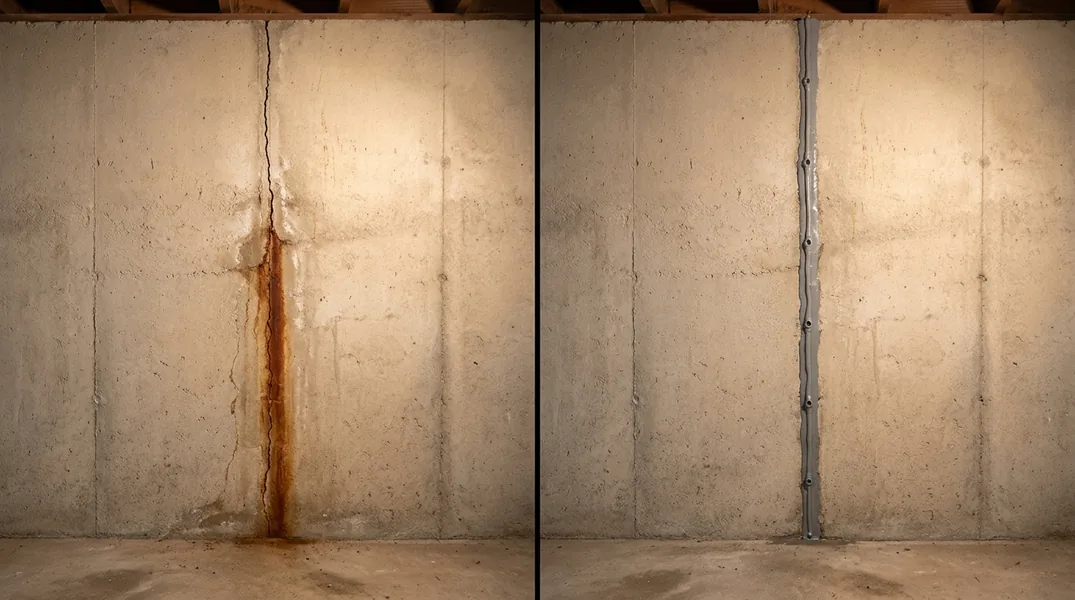
Oklahoma basement leaks are common for several reasons. First, the expansive clay means that water does not drain away from the foundation as it would in other soil types. Instead, it pools against the foundation and slowly seeps through cracks, porous concrete, and the cove joint where the floor meets the wall. Second, the Permian shale below can act as a barrier to drainage, forcing water to move laterally along the shale surface until it finds a path of least resistance, which is often your basement.
Many homes in the area also have basements that were built decades ago, before modern waterproofing standards were common. These older basements may have no drainage system at all, or the original system may have failed. Even newer homes are not immune, because the soil conditions remain the same regardless of when the house was built. If you are dealing with a wet basement, Basement Waterproofing can address the source of the water rather than just the symptoms.
Solutions for Soil Movement and Water Intrusion
Addressing water intrusion in central Oklahoma requires a strategy that accounts for both the water and the soil. One of the most effective approaches is an Interior Drain Tile System, which is installed along the inside perimeter of the basement footing. This system collects water that enters through the cove joint or through cracks in the floor and directs it to a sump pump, which then discharges it away from the home. Because it is installed inside, it is not affected by the expansive clay outside and can be a reliable long-term solution.
In some cases, Exterior Basement Waterproofing is the better choice. This involves excavating around the foundation, applying a waterproof membrane to the exterior walls, and installing drainage to keep water away from the foundation. Exterior solutions can also address the soil pressure itself by improving drainage and reducing the amount of water that reaches the clay around the foundation. A professional can help you determine which approach is right for your home based on the specific soil conditions and the source of the leak.
Basement Waterproofing Near Me: When to Call a Pro
If you have noticed water stains on your basement walls, a musty odor, or efflorescence (the white powdery substance that appears when water evaporates through concrete), it is time to call a professional. These signs indicate that water is actively moving through your foundation, and the problem will not resolve on its own. In fact, it usually gets worse as the soil continues to cycle through wet and dry periods. Ignoring the issue can lead to mold growth, damaged belongings, and structural deterioration that is far more expensive to fix than the original leak.
When you search for basement waterproofing near me in the Oklahoma City area, look for a company that understands local soil conditions and offers a comprehensive evaluation. Oklahoma City Waterproofing has experience with the red clay and Permian shale that make waterproofing in this region unique. We can assess your foundation, explain your options, and provide a free estimate so you know exactly what to expect. Call us at (405) 536-6341 to schedule your evaluation and take the first step toward a dry, stable basement.
Looking for a professional basement waterproofing contractor in Oklahoma City? Oklahoma City Waterproofing responds fast for all your basement waterproofing needs.
Get a Free QuoteOur services: Basement Waterproofing · Interior Drain Tile System · Exterior Basement Waterproofing